The student demonstrates a clear strength in maintaining a space advantage and shows excellent practical results in Slav structures. Their performance in French and Caro-Kann pawn structures, however, is a significant weakness, with scores 17 and 23 percentage points below their baseline, respectively. This pattern suggests a specific difficulty in handling the typical closed, strategic positions these structures generate, which contrasts with their success in more open or fluid setups like the Slav.
The analysis reveals a notable frequency of missed only moves, indicating a pattern where the student fails to find the single critical continuation to maintain an advantage or hold a position. This, combined with two instances of converting a winning position into a loss, points to a lack of precision in critical moments, a key area for improvement at their 2100-2200 level.
While the dashboard notes slower minor piece development, at this rating this is more likely a deliberate, positionally-minded approach rather than a fundamental oversight, especially given their classical-leaning style. The high rate of games where they do not castle (25%) is consistent with this interpretation, often being a feature of specific modern or hypermodern systems they may employ.
Study Focus: Prioritize building a concrete strategic repertoire against the French and Caro-Kann, focusing on plans for the typical pawn structures. Supplement this with targeted calculation training on critical positions to improve precision and reduce missed only moves.
Coaching Dashboard
Full student diagnostic in minutes
Enter a Chess.com or Lichess username and get a complete picture of your student's strengths, weaknesses, opening repertoire, and key games to review.
Player Insights
Style classification, pawn structure performance, castling habits, development patterns, and calibrated weakness/strength flags from 300+ games.
Opening Deviation Scan
Compares your student's moves against a master position database. Detects where they leave theory, how those deviations perform, and Stockfish assessments.
Deep Game Analysis
Stockfish analysis of selected games to find game-losing mistakes, missed only moves, and winning-to-losing swings with mistake categorization.
AI Coaching Reports
AI-generated coaching summary and opening report that synthesize patterns, adapted to the student's rating level. Actionable, not generic.
Profile and Ratings
Pulls game history and ratings across time controls. The chart shows rating trends over time.
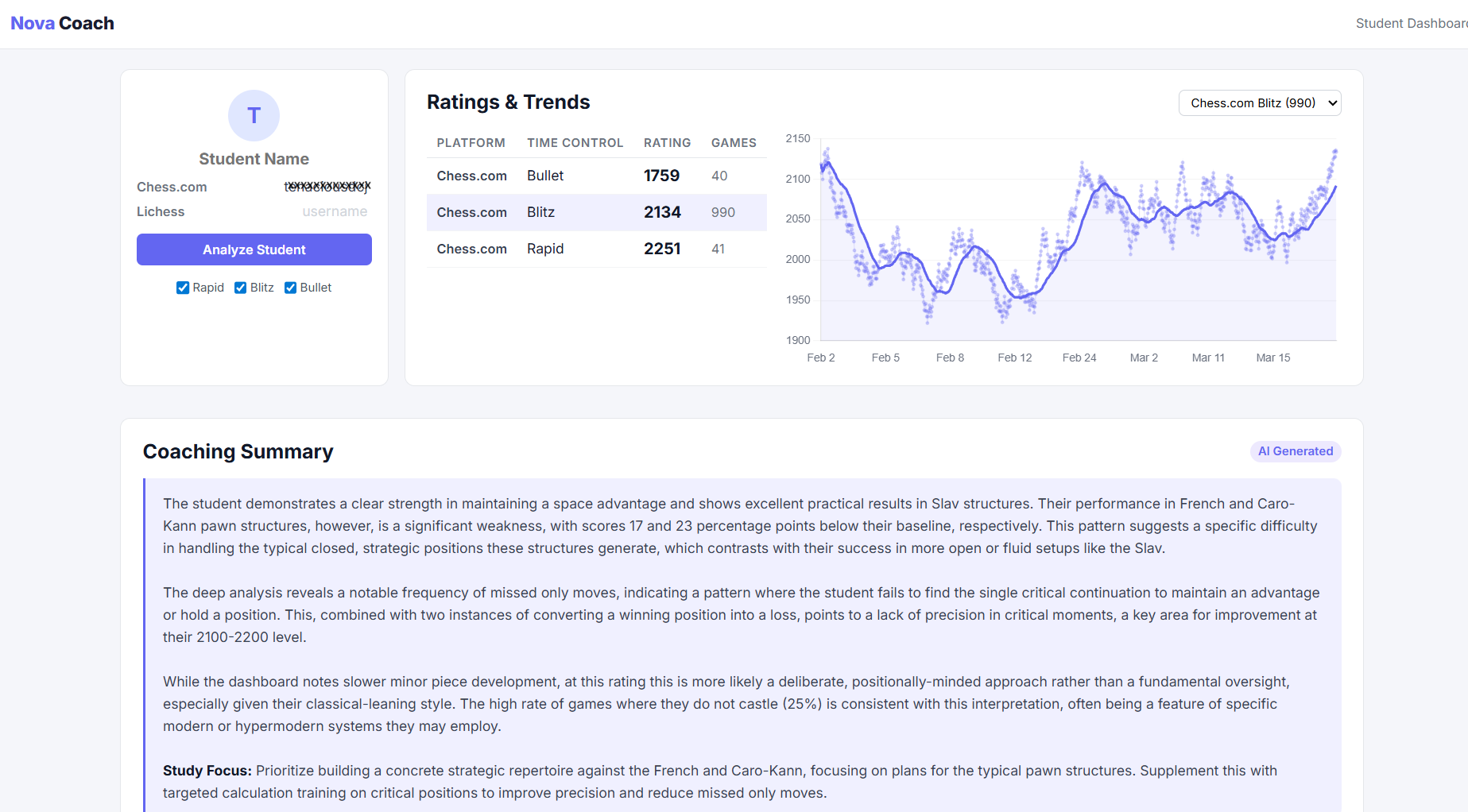
Student username anonymized. Coaching Summary is AI-generated and adapts to the student's rating level.
AI Coaching Summary
Synthesizes patterns across the full analysis. Highlights notable strengths and weaknesses, connects data points the coach might not spot from raw stats alone.
Sample Output
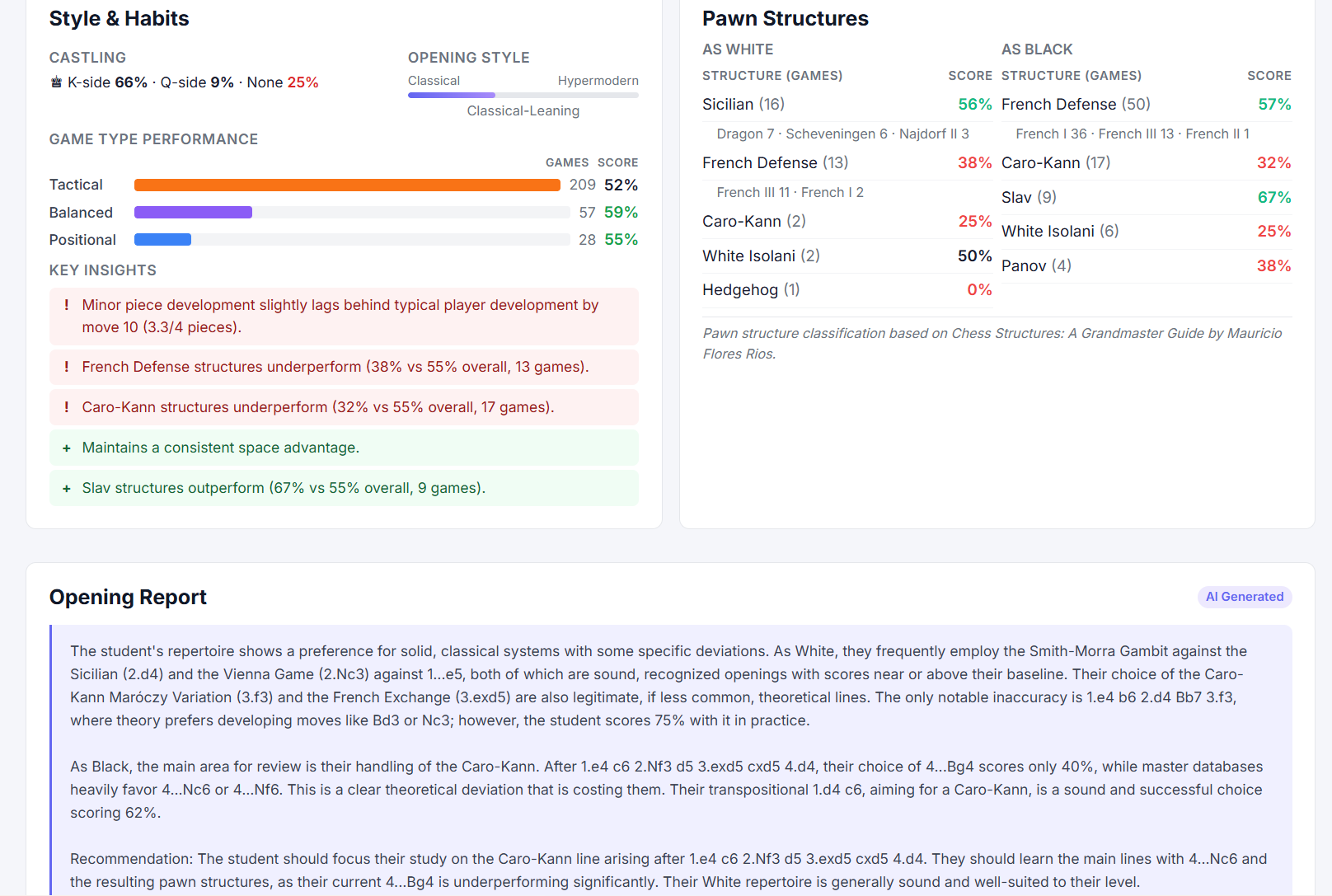
Style, Insights, and Pawn Structures
Playing style classification, game type performance breakdown, key insight flags, and pawn structure performance using Flores Rios classifications.
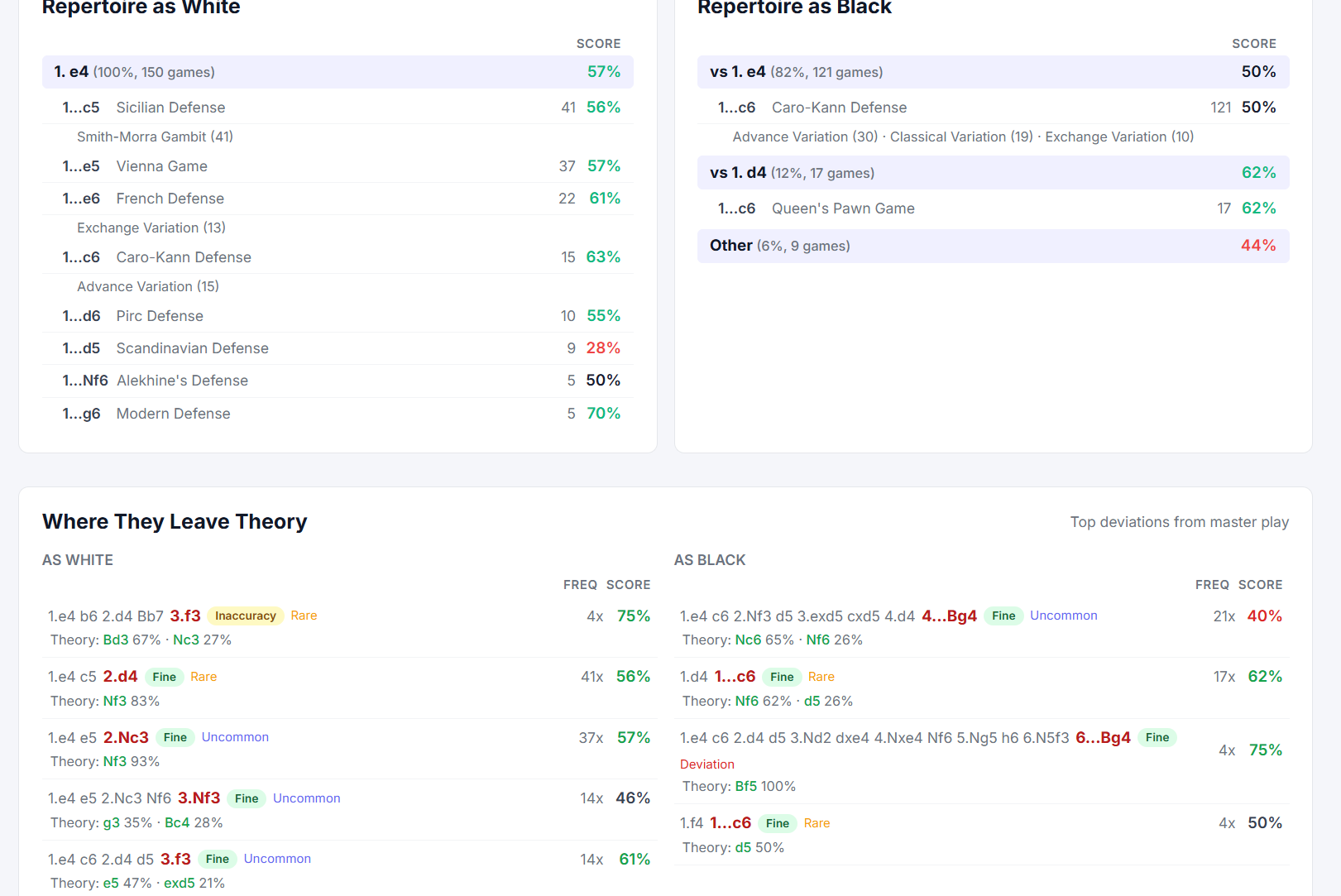
Opening Repertoire and Theory Deviations
Full repertoire tree for white and black, plus every deviation from master practice with Stockfish evaluation, frequency, and score.
Board, Key Moments, and Game Analysis
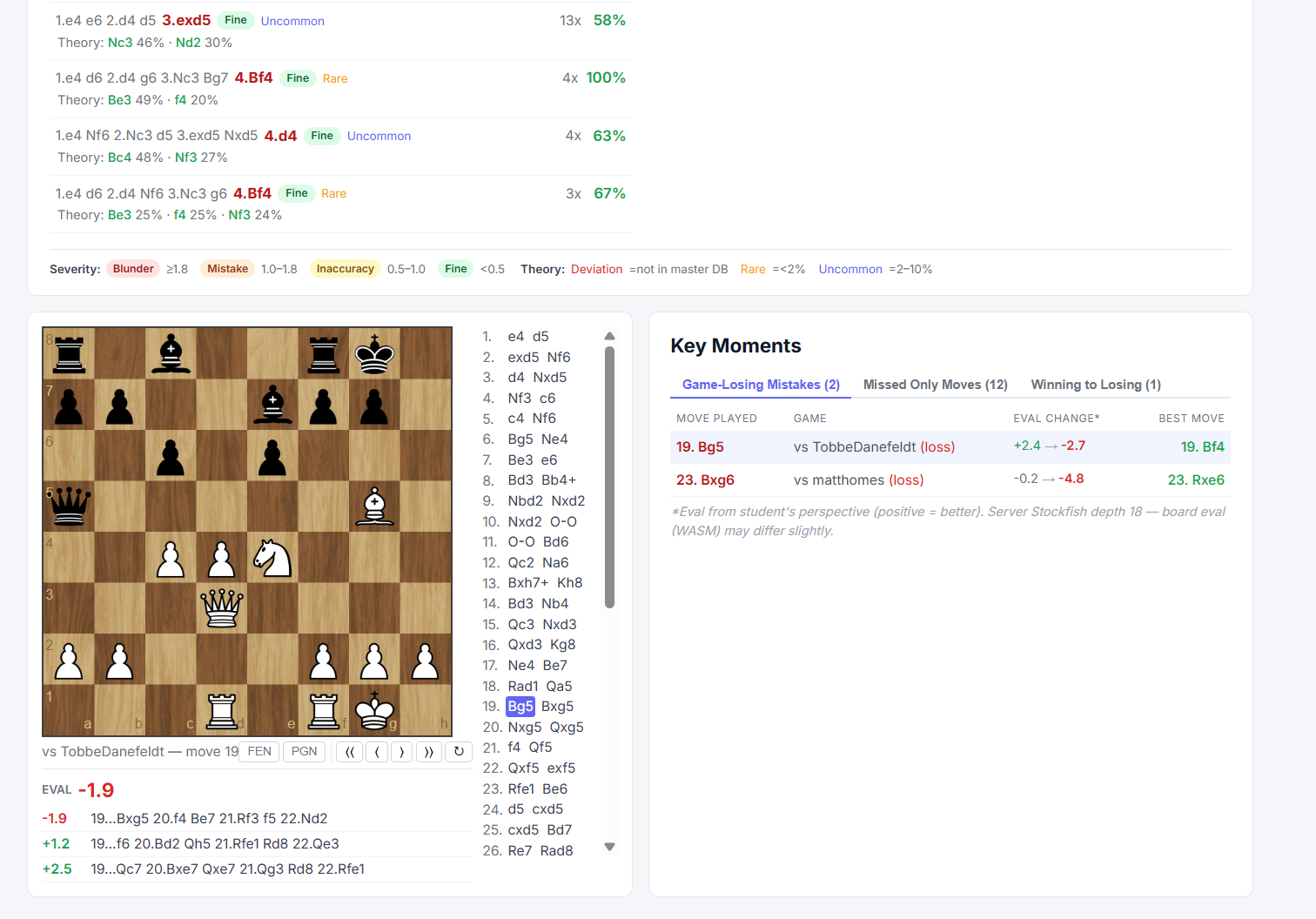
Interactive board with Stockfish eval. Key Moments tabs surface game-losing mistakes, missed only moves, and winning-to-losing swings across all analyzed games.
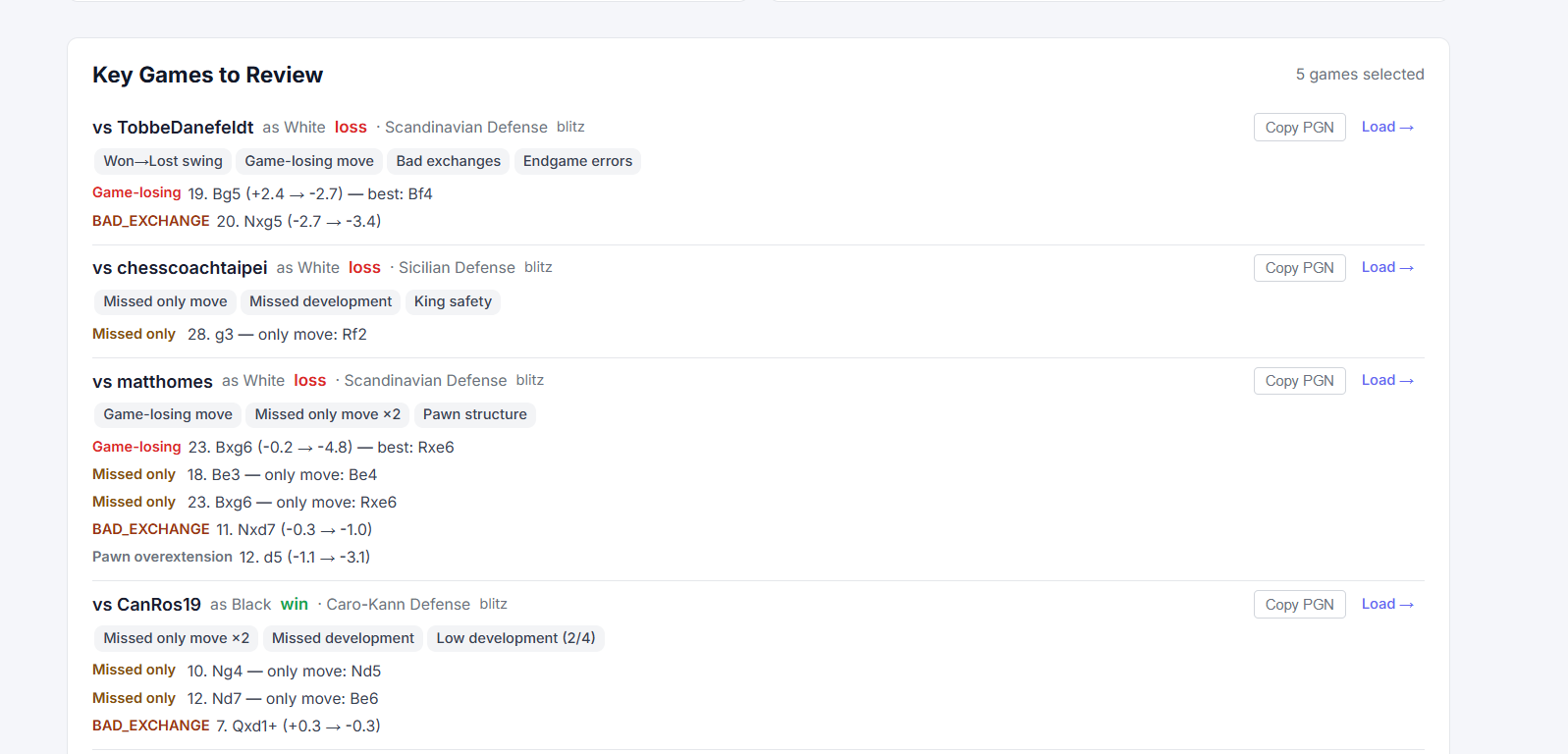
Key Games to Review
A greedy algorithm selects 3-5 games that best cover the student's flagged weaknesses. Each game shows theme badges and clickable critical moments with eval changes.